Most homeowners do not think about their roof until something goes wrong. A stain on the ceiling. A shingle in the yard after a windstorm. A utility bill that keeps climbing.
By the time those things show up, the roof has usually been telling you something for a while.
This article walks you through the real warning signs. Some you can spot from the ground. Some show up inside your home. A few you will only catch with a proper inspection. Knowing what to look for helps you get ahead of a problem before it becomes an expensive one.
How Long Should a Roof Last in Utah?
Before jumping into warning signs, it helps to know what you are working with.
A standard asphalt shingle roof in Utah lasts somewhere between 20 and 30 years. That range depends on the quality of the materials, the installation, and how hard the weather has been on it.
Utah roofs take real punishment. Hailstorms along the Wasatch Front. Heavy snow loads in the foothills of Weber and Davis counties. Freeze-thaw cycles that stress shingles through the winter. Summer heat that bakes rooftops in Salt Lake Valley regularly hitting 100 degrees or more.
If your roof is approaching 20 years old, the warning signs below deserve extra attention. If it is under 10 years old and was installed correctly, you are likely looking at a repair situation rather than a replacement unless the damage is significant.
Signs You Can See From the Ground
You do not need to climb on your roof to spot several of these. A walk around your home with a pair of eyes and maybe some binoculars will tell you a lot.
Missing or Damaged Shingles
Shingles that are cracked, curling at the edges, or missing entirely are a clear sign the roof is losing its ability to protect your home. A few isolated shingles after a storm may be a repair. Widespread cracking or curling across large sections is a replacement conversation.
Granule Loss
Asphalt shingles are coated in granules that protect the material underneath from UV exposure and weather. As a roof ages, those granules start to shed. You will often see them collecting in your gutters or washing out at the base of your downspouts.
Some granule loss is normal over time. Heavy or accelerating loss on a roof that is already aging is a sign the shingles are wearing out. Once the granules are gone the underlying asphalt is exposed to direct sun and weather. It degrades quickly after that.
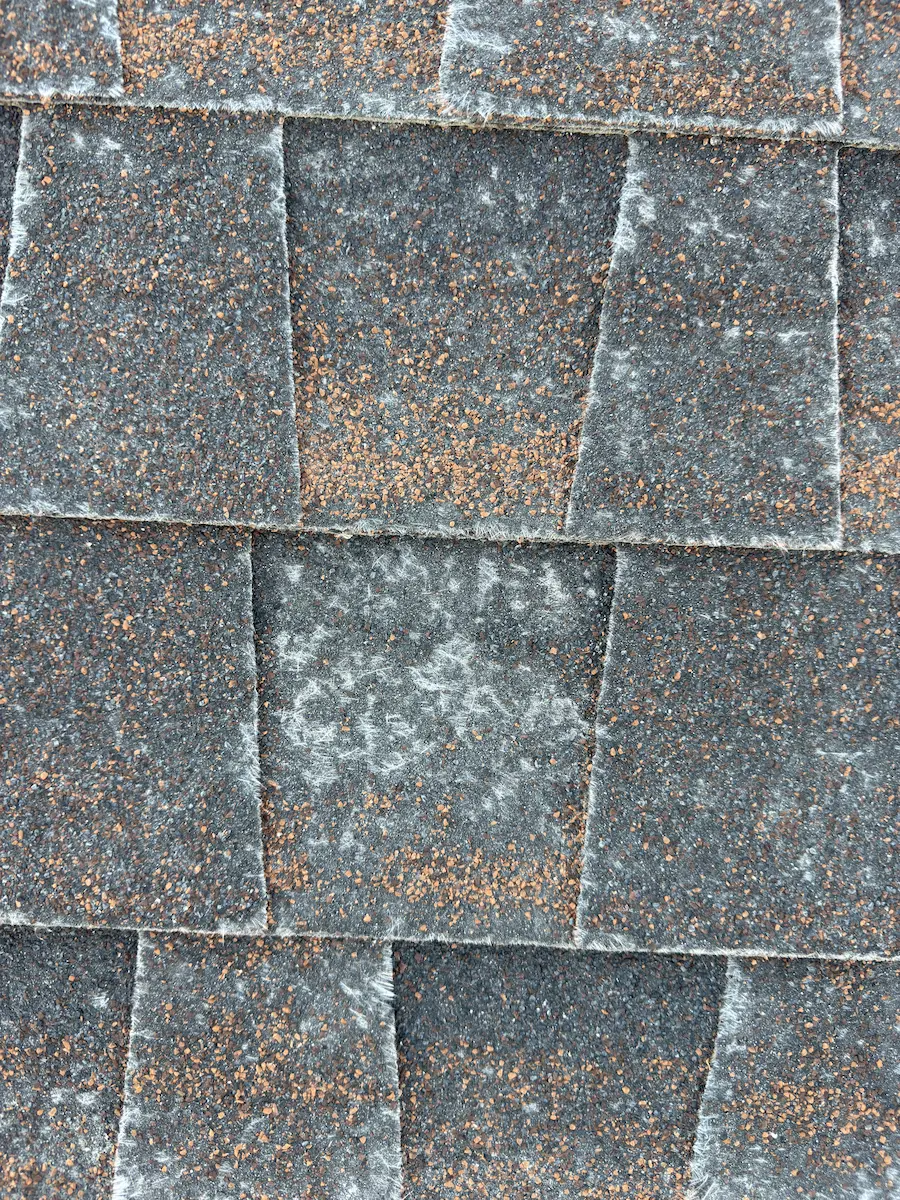
Heavy granule loss on a Utah roof. The orange patches are exposed asphalt where granules have worn away. The white streaking is oxidation. This roof needed replacement.
Sagging or Uneven Roofline
A roofline that sags or dips in places is not just a cosmetic issue. It usually signals a structural problem underneath, either with the decking, the rafters, or both. This is one of the more urgent warning signs. If you see it, call someone sooner rather than later.
Moss or Algae Growth
Dark streaking or green moss growth on your shingles is common in areas with shade and moisture. Moss is more than an eyesore. It holds moisture against the shingle surface and speeds up deterioration. Left unchecked it can work its way under shingles and cause lifting and leaks.
Damaged or Missing Flashing
Flashing is the metal that seals the joints where your roof meets chimneys, walls, vents, and skylights. Rusty, bent, or missing flashing is one of the leading causes of roof leaks. You can often spot obvious flashing problems from the ground around chimneys and roof edges.
Signs You Can See Inside Your Home
Some of the clearest roof warnings show up inside the house, not outside.
Water Stains on Ceilings or Walls
A yellow or brown stain on your ceiling is a sign that water has gotten in somewhere. It does not always mean the roof is the culprit. Plumbing, HVAC condensation, and other sources can cause staining too. But a roof leak is always on the list of suspects and worth ruling out first.
Daylight Coming Through the Attic
If you can get into your attic and you see light coming through the roof boards, water can get through too. This is a straightforward sign that there are gaps or failures in the roof deck or shingles that need attention.
Moisture, Mold, or Mildew in the Attic
Even without visible water, a roof that is allowing moisture in will show it over time. Mold or mildew on attic framing or insulation that has been compressed or stained by water are signs of a slow, ongoing leak. These problems tend to be more advanced than they first appear because moisture damage accumulates quietly.
Skyrocketing Energy Bills
A roof that is failing often means the insulation underneath is compromised. When your attic is not properly sealed and insulated, heating and cooling costs go up. If your energy bills have been climbing without an obvious cause, the roof and attic are worth a look.
Signs That Show Up After a Storm
Utah weather can be hard on roofs. After a significant hailstorm or windstorm, it is worth taking a closer look.
Hail Damage
Hail damage on asphalt shingles shows up as small dark spots or dents where the granules have been knocked off. From the ground it can be hard to see. On metal components like flashing, vents, and gutters, hail hits are easier to spot as small dents or dings.
If your neighbors are filing insurance claims after a hailstorm, your roof likely took the same hit. It is worth having someone get on the roof and document what is there before you decide whether to file.
Wind Damage
High winds along the Wasatch Front can lift shingles at the edges and corners where they are most vulnerable. Lifted or peeled shingles let water underneath and compromise the seal between shingles. Sometimes wind damage is obvious. Sometimes a shingle looks fine from the ground but has broken the seal strip underneath.
Repair or Replace: A Quick Reference
Not every warning sign means you need a full replacement. Here is a simple way to think about it.
| Lean Toward Repair | Lean Toward Replacement |
|---|---|
| Roof is under 15 years old | Roof is 20+ years old |
| Damage is isolated to one area | Damage is widespread across the roof |
| Storm damage to a few shingles | Curling, cracking across large sections |
| First repair on this roof | Multiple repairs in recent years |
| Decking is dry and solid | Decking is soft, rotted, or failing |
| Flashing issue at one point | Granule loss across most of the surface |
When in doubt, get an inspection. It costs nothing and removes the guesswork.
3 Reasons You Should NOT Replace Your Roof Yet
We are a roofing company. We make money when roofs get replaced. So when we tell you not to replace yours yet, we mean it.
1. Your Roof Is Under 15 Years Old and the Damage Is Isolated
A roof with good years left does not need to come off because of a few problem spots. A targeted repair done correctly can add years of life without the cost of a full replacement. We will tell you honestly when this is the case.
2. The Problem Is Maintenance, Not Failure
Sometimes what looks like a failing roof is actually a maintenance issue. Clogged gutters causing water backup. A pipe boot that needs resealing. Debris buildup in a valley. These are $200 to $500 fixes, not $15,000 replacements. A good contractor will tell you which one you are dealing with.
3. You Are Planning to Sell in the Next 12 Months
If you are listing your home soon, a documented repair and a clear inspection report may be all you need to get to closing. A full replacement is sometimes the right call before a sale, but not always. It depends on the age and condition of the roof and what the market in your area expects. We can help you think through the tradeoff.
If I Do Need a New Roof, What Will It Cost?
Most Utah homeowners pay between $8,000 and $25,000 for a full asphalt shingle roof replacement. The average for a standard single-family home falls around $12,000 to $15,000. Size, pitch, materials, and decking condition all affect the final number.
For a full breakdown of what drives the cost and what to expect in 2026, see our Utah Roof Replacement Cost Guide.
When to Call for an Inspection
You do not need to wait until something is obviously wrong. Here are situations where calling for a free inspection just makes sense.
- Your roof is 15 years old or older
- You recently went through a significant hailstorm or windstorm
- You are seeing any of the warning signs above
- You are getting ready to sell your home and want to know what you are working with
- You have not had your roof inspected in the last few years and want peace of mind
A good inspection takes about 30 to 45 minutes. A contractor gets on the roof, checks the field of shingles, flashing points, ridgeline, gutters, and attic if accessible. You get a clear picture of what is there and what, if anything, needs attention.
What Homer Roofing Will Tell You
We are going to give you an honest assessment. If your roof has years of life left, we will tell you that. If it needs attention, we will show you exactly what we are seeing and explain your options.
We serve Weber, Davis, and Salt Lake counties and offer free inspections with no obligation. Give us a call or schedule a free inspection. We will get on your roof and give you a straight answer.
The Short Version
The most common signs you need a new roof include missing or curling shingles, significant granule loss, a sagging roofline, water stains inside the home, and visible daylight or moisture in the attic. Age matters too. If your roof is over 20 years old and showing any of these signs, it is time to have someone take a look.
Not every warning sign means full replacement. A good understanding of repair vs. replacement starts with an inspection. Get one first and go from there.